
The Mortgage Loan Officer's Branding Problem (And the Two-Website Strategy That Fixes It)
By Dan Kalis, FullyMarketable
Every LO has the same rates and products. The only differentiator is you. Here is the two-website strategy that makes you the first call instead of the second.
I spent six years in the mortgage industry. I originated loans. I worked the wholesale side as an Account Executive. I sat in the rooms where loan officers talked about what they needed most, and the answer was always the same: more realtors sending them deals.
That was 2003 to 2009. It is now 2026, and the conversation has not changed. The entire mortgage origination industry still revolves around one question: how do I get more realtors to refer me?
That question is not wrong. Realtor referrals are the lifeblood of most loan officers' businesses, and they will continue to be. But the question has a trap built into it, and almost nobody in the industry talks about it: if your entire business depends on realtors choosing you, then realtors hold all the power. You are permanently positioned as the one doing the courting, the pitching, the chasing. The realtor decides. You wait.
This article is about two things. First, why every mortgage loan officer needs a personal brand website that is dramatically better than what they have now. Second, and this is the part that could change the trajectory of your career, why the smartest loan officers in 2026 are building a second web presence: a media brand that flips the referral power dynamic entirely.
The Most Commoditized Profession in Professional Services
Here is the uncomfortable truth about mortgage lending: from the consumer's perspective, you are interchangeable.
Every loan officer has access to the same products. The rate differences between you and your competitor are measured in fractions of a percent. Your licensing requirements are identical. Your compliance obligations are identical. The technology platforms you use are increasingly identical.
When a realtor refers a buyer to you, that buyer did not choose you. The realtor chose you. The buyer has no idea who you are, no attachment to you, and no reason to prefer you over any other licensed loan officer in your market. You are a name on a business card the realtor handed them.
This is commoditization, and it is the single biggest strategic threat to any loan officer's long-term career. Because when you are a commodity, you compete on two things: relationships (with realtors) and availability (answering the phone at 10pm). Both of those are exhausting, neither scales, and both can be taken from you overnight when a realtor decides to send their referrals to someone else.
The escape from commoditization is the same in every industry, and it has been proven over and over for a century: differentiation through brand. Not a logo. Not a tagline. A personal brand that makes a specific, identifiable group of people feel like you understand them better than anyone else in the market, and that choosing you is not a gamble but an obvious decision.
The irony is that loan officers understand this instinctively because they watch realtors do it every day.
You Court Realtors for a Living. Look at How They Brand Themselves. Now Look at Your Website.
Realtors are among the most personal-brand-conscious professionals in America. They invest in professional photography. They put their face on bus benches and grocery carts. They build personal websites with their name, their story, their testimonials, their market expertise. They understand, at a gut level, that people choose people, not companies.
And yet, when a realtor evaluates loan officer partners (which they do constantly, because a reliable LO is one of the most important relationships in their business), what do they find?
A GoHighLevel funnel with a headshot and a "Get Pre-Approved" button. Or a corporate profile page on the brokerage's website that looks identical to every other LO at the company. Or a Wix site that has not been updated since 2021. Or, in many cases, nothing at all beyond a Zillow profile and a LinkedIn page.
Here is what that communicates to a realtor: this person does not invest in themselves. If they do not invest in their own brand, how seriously are they going to invest in mine? How confidently can I hand my buyer to someone whose online presence looks like they set it up during a lunch break?
Realtors evaluate LO partners the same way their buyers evaluate them: by first impression, by professionalism, by whether the person looks like they have their act together. A loan officer with a compelling personal brand website, one with a real origin story, outcome-based testimonials, a clear articulation of their process, and specific proof of their track record, stands out from the field the same way a well-dressed person stands out in a room full of people in wrinkled khakis.
You do not need to be flashier than every other LO. You need to be more intentional. And in a market where almost nobody is intentional about their personal brand, even a modest investment puts you in a different category entirely.
What a Real Personal Brand Website Does for a Loan Officer
A personal brand website is not a lead capture funnel. It is not a rate calculator. It is not a pre-approval form. Those tools have their place, but they answer a transactional question ("can I get a loan?") that belongs later in the process.
A personal brand website answers the question that comes first: "Who is this person, and should I trust them with the biggest financial commitment of my life?"
For a realtor evaluating partners, the question is slightly different but equally important: "Is this someone I can confidently hand my clients to, knowing they will be taken care of and that the deal will close?"
A strong personal brand site answers both questions by doing several things no funnel or corporate profile can do.
It tells your origin story. Not a two-line bio. A real narrative about how you entered lending, what you have learned across hundreds or thousands of transactions, and why you do this work. People trust people with stories. A loan officer who can articulate why they chose this career and what they have seen along the way is immediately more credible than one who is just a name next to an NMLS number.
It presents your track record with specificity. Total loans closed. Total volume funded. Years in the industry. Types of borrowers you specialize in (first-time buyers, self-employed, veterans, jumbo, investment properties). Average closing time. These are not vanity metrics. They are proof points that allow a realtor or a borrower to evaluate your competence in concrete terms rather than trusting a generic claim of "experience."
It stacks testimonials that tell stories. Not "great communication, highly recommend." The first-time buyer who was told by two other lenders they could not qualify, and you found a way. The self-employed borrower whose tax situation was complicated and you structured the deal creatively. The realtor who has sent you twelve transactions because you have never once blown a closing date. These stories are sitting in your career right now. They are worth more on a website than any rate advertisement you will ever run.
It gives you a platform for content. Blog posts answering real borrower questions build your authority in Google and, increasingly, in AI tools that recommend professionals by name. A loan officer with ten blog posts targeting real search queries ("How much house can I afford on a $90,000 salary?" "What credit score do I actually need to buy a house in 2026?" "Is it better to put 20% down or keep cash reserves?") is building a compounding asset that generates inbound interest without relying on a single realtor referral.
It is portable. If you change brokerages (and in this industry, you probably will), your personal brand site on your own domain goes with you. Your SEO authority, your testimonials, your content, your Google rankings: all of it transfers. A corporate profile page disappears the day you leave. A personal brand site is a career asset, not a company perk.
The Power Dynamic Nobody Talks About
Now let me tell you about the bigger opportunity. The one that goes beyond personal branding and into territory that could fundamentally change how you build your business.
Here is the current power structure in residential real estate, and it has been this way for decades:
A consumer decides they want to buy a home. They contact a realtor. The realtor refers them to a loan officer. The loan officer pre-approves the buyer. The realtor shows homes. The loan officer processes the file. Everyone gets paid.
In this structure, the realtor owns the consumer relationship. The loan officer is downstream. The realtor chose the LO, not the consumer. The LO's entire pipeline depends on maintaining that referral relationship, which means the realtor has leverage and the LO does not.
This dynamic exists for one simple reason: nobody actually wants a mortgage. People want a home. The mortgage is the necessary mechanism for getting the home, but it is not the thing anyone is excited about. So consumers naturally start with the person who represents the thing they want (the realtor) and engage with the mortgage professional only when told to.
Every loan officer reading this has felt this dynamic. You know what it is like to compete for a realtor's attention. To take them to lunch. To sponsor their open houses. To send them deals and referrals hoping they reciprocate. To lose a referral partner overnight because a competitor offered a slightly faster turn time or a slightly better co-marketing arrangement.
What if you did not have to play that game?
The Media Brand: How to Become the First Call Instead of the Second
Gary Vaynerchuk has been saying it for years: every professional should be building a media company around their expertise. Brian Clark built Copyblogger and then Rainmaker on the same thesis: content is not marketing, it is a business asset. The professionals who own media properties own audiences. And audiences are the most valuable asset in any market.
Here is how this applies to mortgage lending, and why it is the most underexploited opportunity in the industry.
Instead of only building a personal brand site (which you should absolutely do), you also build a separate media property: a content-driven website dedicated to helping homebuyers navigate the entire home-buying process. Not a mortgage site. A homebuyer education site that happens to be created and hosted by a mortgage professional.
The distinction is everything.
A mortgage website says: "I do loans. Come get pre-approved."
A homebuyer media site says: "You are thinking about buying a home. Here is everything you need to know, from how much you can afford, to what to expect at inspection, to how to negotiate in a competitive market, to what really happens at closing. I am the expert who created this resource, and when you are ready to talk about financing, I am already the person you trust."
This is the inversion. Instead of waiting downstream for a realtor to send you a borrower, you are capturing the borrower upstream, before they ever talk to a realtor. You are answering their questions. You are building trust. You are positioning yourself as the knowledgeable professional they should talk to first.
And here is where the power dynamic flips: when a borrower comes to you first, pre-educated and pre-trusting, and you refer them to a realtor, now the realtor needs you. Now you are the one with the consumer relationship. Now the referral flows in the other direction.
This is not theoretical. This is category design applied to mortgage lending. You are not competing harder for realtor referrals. You are building a new category where the mortgage professional is the first point of contact in the homebuying journey, not the second.
What a Homebuyer Media Property Looks Like
A homebuyer media property is a separate website, distinct from your personal brand site, dedicated entirely to content that helps people who are thinking about buying a home.
It can live on its own domain (something memorable and consumer-friendly, like a variation of "homebuyer help," "first home guide," or a branded content property name) or as a subdomain of an existing media domain. What matters is that it is separate from your personal brand site, because it serves a different audience at a different moment. Your personal brand site is for people evaluating you specifically. Your media property is for people who do not know you yet but are searching for answers to questions you can expertly address.
The content covers the full homebuying journey, not just the mortgage piece. This is critical. If the site only covers mortgage topics, it reads as a loan officer's marketing play. If it covers the entire homebuying experience (finding the right neighborhood, understanding what you can afford, working with a realtor, the inspection process, negotiating offers, what happens at closing, first-year homeownership tips), it reads as a genuine educational resource. The mortgage expertise woven throughout is what differentiates you, but the breadth of content is what makes the site valuable and trustworthy to consumers.
Every piece of content ends with a soft, natural connection back to you: "Have questions about what you can afford? Talk to a mortgage professional who has helped hundreds of buyers in [your market] navigate this exact decision."
The site builds SEO and AI citation authority over time. When someone in your market asks Google or ChatGPT "how much house can I afford on $80,000 a year in Phoenix," your content is what shows up. When someone asks Perplexity "what should I know before buying my first home," your resource is what gets cited. Each piece of content is a fishing line in the water, and the fish are high-intent homebuyers who have not yet talked to a realtor.
You can feature the site in your realtor pitches as well. A loan officer who walks into a realtor meeting and says "I built a homebuyer education platform that generates inbound buyer leads in our market, and I refer every qualified buyer to my realtor partners" is not courting the realtor. That loan officer is offering something no other LO in the market has. The realtor is now evaluating a partnership, not granting a favor.
Two Websites, Two Jobs, One Career Strategy
Here is the full architecture:
Website one is your personal brand site. It lives on your name or your brand domain. It tells your story, showcases your credentials and testimonials, builds SEO authority around your name, and serves as the trust-building destination for anyone who has been referred to you or who Googles you before a first call. This is your professional identity online. It should be compelling, specific, and dramatically better than the GoHighLevel funnel or corporate profile page you are currently relying on.
Website two is your media property. It lives on a separate domain or subdomain. It publishes content that helps homebuyers navigate the entire home-buying journey. It captures consumer attention upstream, before a realtor is involved. It builds your authority as the go-to expert in your market. It generates inbound buyer interest that you can then refer to realtor partners, flipping the referral dynamic. And it compounds over time: every post, every answer, every resource builds the authority of the property and makes you harder to compete with.
Together, these two sites create a moat that no rate sheet, no co-marketing flyer, and no lunch meeting can replicate. One builds your reputation. The other builds your audience. Reputation plus audience equals a career that does not depend on any single realtor, any single brokerage, or any single referral source.
Why Almost No Loan Officers Are Doing This (And Why That Is Your Advantage)
The mortgage industry is full of smart, hardworking people who are stuck in a tactical loop: call realtors, buy lunch, sponsor events, answer the phone at all hours, and hope the referrals keep coming. That loop works. It has worked for decades. But it is exhausting, it does not scale, and it leaves you permanently dependent on relationships you do not fully control.
The reason almost no loan officers are building personal brand websites or media properties is the same reason most small business owners have outdated websites: nobody ever explained the strategic value in terms that make sense. The industry trains LOs to sell rates and close loans. It does not train them to build brands and own audiences.
That is the gap. And if you are reading this, you now see it.
In a market with tens of thousands of licensed loan officers, where every competitor has the same products and similar rates, the ones who build a personal brand and a media platform are playing an entirely different game. They are not trying to be the best commodity. They are not trying to win the realtor courtship. They are building something that makes them the obvious choice before the competition even enters the conversation.
The window for this strategy is open right now because almost nobody is doing it. The loan officers who build these assets today will own the search results, the AI citations, and the consumer relationships in their markets for years. The ones who wait will eventually face competitors who already did, and catching up is always harder than leading.
Where to Start
If you are a mortgage loan officer or broker reading this and recognizing yourself in these pages, here is the practical starting point:
Step one: get a personal brand website that actually represents who you are and what you have built. Not a template. Not a funnel. A real, conversion-focused, story-driven personal brand site with your origin story, your track record, your testimonials, your credentials, and content that ranks in Google and gets cited by AI tools. If your brokerage gives you the compliance freedom to build on your own domain (and many, including NEXA Lending, do), you should be using it.
Step two: start thinking about your media property. What would a homebuyer education site look like in your market? What are the questions every first-time buyer in your city asks? What are the questions they should be asking but do not know to ask? That content, published consistently over time on a dedicated property, is what builds the audience that changes your career.
We build both. The personal brand site is what we do every day: a finished homepage built on spec, shown to you before you pay a dollar, $2,500 flat. The media property is a conversation about your market, your content strategy, and the platform that best serves your long-term goals. Both are designed to make you the most visible, most trusted, and most sought-after mortgage professional in your market.
If you want to see what we would build for you, send us your current website (or your GoHighLevel link, or your brokerage profile, or nothing at all). We will assess it honestly and, if the opportunity is there, show you the finished result before asking for anything.
Because in 2026, the loan officers who are still waiting for realtors to choose them are playing a game they did not design and cannot win. The ones who build a brand and an audience are designing their own game. And in that game, the realtor calls you.
About the Author
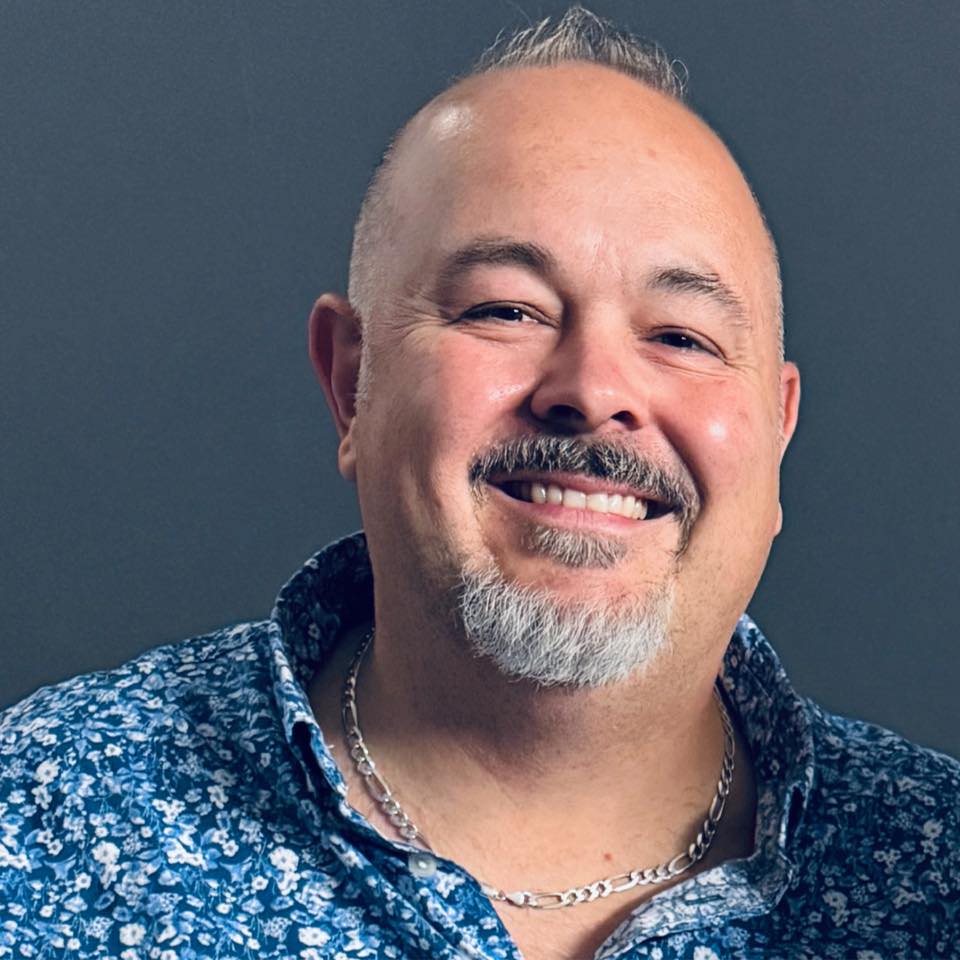
Dan Kalis is the founder of UpgradedWebsites.com and FullyMarketable. Before building websites, he spent six years in the mortgage industry in Chicago (2003 to 2009) as both a loan originator and a wholesale Account Executive, followed by 15 years in business capital advisory. He has spent 25 years advising 7 and 8-figure entrepreneurs on growth, capital, and marketing strategy.